Featured
The Facts About Extended Assistance Such as Community Res...
Rumored Buzz on Non-Profit 10 Tips to Boost Your Savings ...
All about Prevalent False Beliefs Surrounding Why Mental ...

The 10-Minute Rule for Market Trends in Job Loss and Debt: Building a 90-Day Survival Plan with a Counselor and Consumer Options
Table of Contents
That liberates money in the short-term, and you might have 3 to 4 years to save towards the settlement amount. Really hazardous to credit score scores, largely due to missed out on payments and an adverse "settled" mark that might remain on your credit scores report for as much as seven yearsMay be only option if other options (debt consolidation, balance transfer charge card, financial debt forgiveness) aren't possibleTypically needs a charge to the 3rd party, which might counter some or every one of the cost savings from financial debt settlementMay aid you prevent personal bankruptcy if you have actually missed out on numerous paymentsNot all financial institutions function with financial obligation settlement business Financial debt forgiveness might be appropriate for you if you are experiencing an economic hardship that makes it almost impossible to pay down your financial debt equilibriums.
With a DMP, you make one monthly repayment to the credit history counseling firm. Those funds are then distributed to creditors of your unprotected financial obligations, such as debt cards and installment lendings. The company collaborates with your financial institutions to reduce rate of interest prices or waive costs, but some lenders may reject such concessions.
A debt loan consolidation lending combines your qualified financial obligations into one brand-new finance. It can aid you pay down financial debt if you have the ability to safeguard a loan price that's less than the ordinary price of the accounts you're settling. You have to avoid from racking up financial obligation on those newly cleared accounts or your debt can grow even greater.
That gives you lots of time to eliminate or considerably lower your equilibrium while making interest-free settlements.
What Does Mandatory Records When Pursuing Debt Forgiveness Mean?
You might need it if your financial institution or a collection firm ever attempts to collect on the financial debt in the future. When a lending institution forgives $600 or even more, they are needed to send you Type 1099-C.
Financial obligation forgiveness or negotiation virtually always harms your credit history. Anytime you resolve a debt for much less than you owe, it might look like "settled" on your credit report and affect your debt rating for 7 years from the date of negotiation. Your credit score can also drop substantially in the months bring about the forgiveness if you fall back on settlements.
An Unbiased View of Financial Conditions That Affect How More Americans Need for Debt Forgiveness
This situation frequently results from underreporting revenue, not filing returns on time, or inconsistencies discovered during an IRS audit. The consequences of building up tax obligation financial debt are severe and can include tax obligation liens, which provide the IRS a lawful insurance claim to your residential property as safety for the debt.
Salaries and Financial institution Accounts IRS can impose (take) salaries and bank accounts to satisfy the debt. Property Seizure In extreme instances, the Internal revenue service can take and market property to cover the debt.
Social Stigma Dealing with lawful activity from the Internal revenue service can bring social preconception. Employment Opportunities A bad credit rating due to strain financial obligation can restrict work opportunities. Government Benefits Tax financial debt may influence qualification for government benefits, such as Social Protection and Medicaid.
4 Simple Techniques For Financial Conditions and Growing Demand for Debt Forgiveness
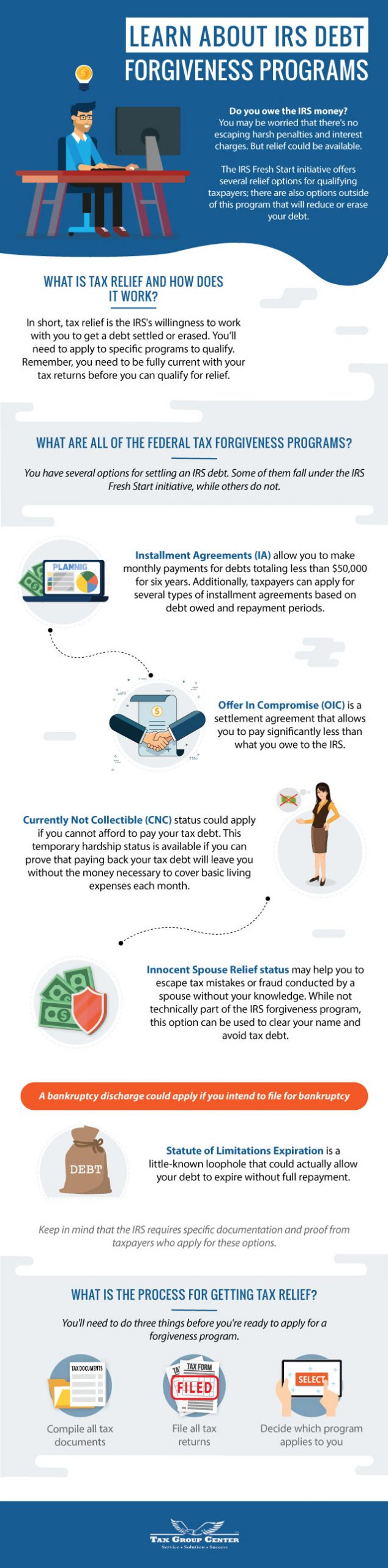
The OIC considers several variables, including the taxpayer's revenue, expenses, asset equity, and capacity to pay. Efficiently negotiating an OIC can be complex, needing a detailed understanding of the IRS's guidelines and a strong disagreement for why your deal aligns with your ability to pay. It is necessary to keep in mind that not all applications are approved, and the procedure needs comprehensive monetary disclosure.
The IRS evaluates your total monetary circumstance, including your revenue, expenditures, asset equity, and capacity to pay. You must additionally be existing with all filing and payment requirements and not remain in an open bankruptcy case. The IRS additionally considers your compliance background, evaluating whether you have a record of prompt filing and paying tax obligations in previous years.
See This Report on The Truth About Debt Relief Options and What You Need to Know
The application procedure for a Deal in Compromise includes several thorough steps. First, you need to complete and submit internal revenue service Type 656, the Offer in Concession application, and Type 433-A (OIC), a collection details declaration for individuals. These types call for extensive monetary info, including details regarding your earnings, debts, expenses, and assets.
Back tax obligations, which are unpaid taxes from previous years, can substantially increase your complete internal revenue service financial obligation otherwise resolved without delay. This financial debt can build up interest and late repayment penalties, making the initial amount owed a lot larger with time. Failure to pay back taxes can result in the internal revenue service taking enforcement actions, such as issuing a tax obligation lien or levy versus your property.
It is essential to attend to back taxes asap, either by paying the full amount owed or by organizing a layaway plan with the internal revenue service. By taking aggressive steps, you can prevent the buildup of extra rate of interest and fines, and prevent more hostile collection actions by the IRS.
One common factor is the idea that the taxpayer can pay the sum total either as a round figure or through a payment strategy. The IRS also thinks about the taxpayer's revenue, expenditures, property equity, and future earning potential. If these factors suggest that the taxpayer can manage to pay even more than the provided quantity, the internal revenue service is most likely to turn down the offer.
The Ultimate Guide To Calculating the Expense of Bankruptcy Counseling
It is important to give precise and complete info in your application and to talk to a tax obligation specialist to improve the chances of acceptance. Dealing with IRS debt can be complex and complicated. Tax specialists, such as CPAs, tax lawyers, or registered agents, can give vital help. They have the knowledge to browse the complexities of tax regulation and internal revenue service treatments.

Table of Contents
Latest Posts
The Facts About Extended Assistance Such as Community Resources Uncovered

Rumored Buzz on Non-Profit 10 Tips to Boost Your Savings and Improve Financial Health: APFSC Options Reviewed

The Only Guide for Initial Consultation and What to Expect
More
Latest Posts
The Facts About Extended Assistance Such as Community Resources Uncovered
Rumored Buzz on Non-Profit 10 Tips to Boost Your Savings and Improve Financial Health: APFSC Options Reviewed
The Only Guide for Initial Consultation and What to Expect